
The group's technology
Innovation and artificial intelligence
The group develops its own technical colour assistants: Edgar for KUST, Lucy for YDOL. Colour-reasoning tools, not gadgets.
Colour AI born behind the chair.
The group develops its own technical colour assistants. They are not generic chatbots dressed up in a brand’s colours: they are colour-reasoning tools, built on real catalogues, real formulas, and the questions hairdressers actually ask.
The starting point is an everyday problem. A client arrives with an uneven base, an uncertain colour history, a specific request, and an hour to spare. The hairdresser has to decide: which base, which highlight, which developer, which processing time, which correction. Getting it wrong costs a product, an appointment, and sometimes a client.
Our assistants
Edgar
The KUST brand's technical assistant. He works from the KUST catalogue: formulas, dosages, tone levels, tone corrections, lightening protocols. He keeps a formal tone, like the brand.
Lucy
The YDOL brand's colourist assistant. She reasons from the Yconik range and answers in the brand's tone, directly from the website and by message.
Each assistant is tied to a brand and a catalogue. They are neither interchangeable nor merged: a technical answer only has value if it concerns the products the hairdresser actually has to hand.
What AI does, and doesn't do
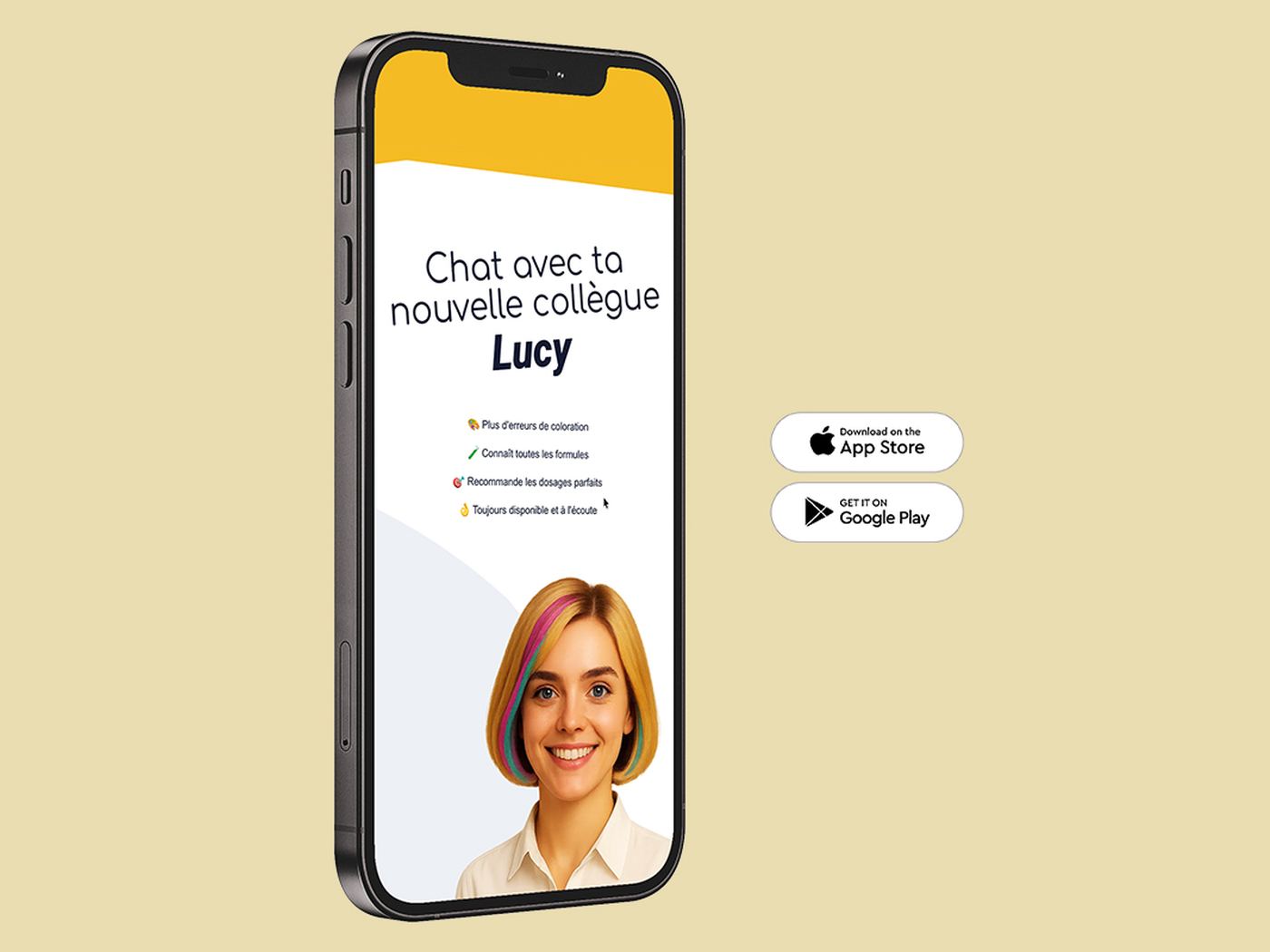
An assistant does not replace a colourist.
It doesn’t touch the hair, doesn’t see the salon’s lighting, and doesn’t know the client. What it brings lies elsewhere: it removes hesitation, it recalls a forgotten rule, it proposes a starting formula that a professional confirms or corrects in three seconds.
It’s also a matter of timing. Technical questions come in on a Saturday at eleven, not a Tuesday at two. An assistant available round the clock answers at the moment when the answer actually has value.
Beyond advice
Artificial intelligence also serves what isn’t visible.
The group uses the same tools for its own operations: sales tracking, stock and restocking management, customer support, market monitoring, content preparation. These are repetitive tasks that, once properly automated, free up time for what requires human judgement.
Our position is constant: a tool must be judged by what it actually saves on the ground. If it changes nothing in the salon, it serves no purpose.
Frequently asked questions
It’s a tool that helps a hairdresser build a colour formula: it starts from the hair’s base, the target tone level and the desired highlight, then suggests a mix, a developer and a processing time from a specific product catalogue.
They are made available to professionals by the group’s brands, through their respective websites.
Yes, like any advice given remotely. The final decision always rests with the professional, who sees the hair and the client. An in-salon diagnosis remains essential.
The assistants draw on the brands’ catalogues, technical protocols and documentation. Exchanges are used to answer the question asked, not to build a marketing database.